
Imagine your phone rings late in the afternoon. You answer politely, only to hear someone asking for a person you’ve never met. In that moment, the quickest response is often: “You have the wrong number.” It’s a simple phrase, but it plays an important role in modern communication—whether through phone calls, text messages, or messaging apps.
“You have the wrong number” helps correct a communication mistake clearly and efficiently. However, the way you say it can dramatically affect how the message is received. A direct version may sound blunt, while a softer alternative can feel more professional, polite, or reassuring. Understanding its meaning and knowing better alternatives helps professionals, students, ESL learners, and writers communicate with more confidence and tact.
What Does “You Have The Wrong Number” Mean?
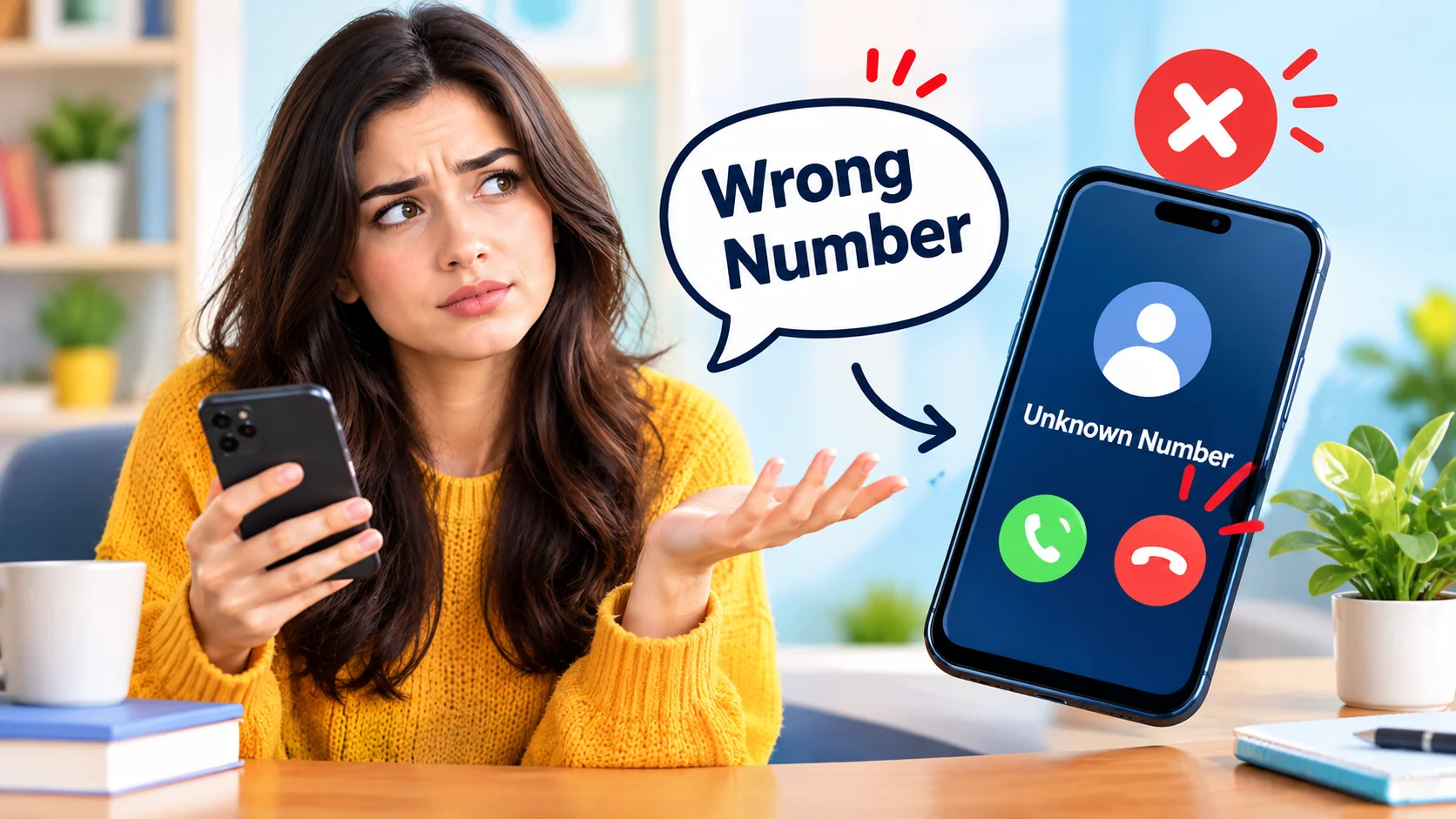
“You have the wrong number” means the caller or sender has contacted the incorrect phone number and has reached someone other than the intended person. It is commonly used during phone calls, text messages, or chats to inform someone that their communication was misdirected.
Origin & History of the Phrase
The phrase emerged alongside widespread telephone use in the early 20th century. As telephone networks expanded through companies like AT&T, accidental misdialing became common. People needed a short, clear way to tell callers they had reached the wrong person.
Historically, operators manually connected calls, so wrong connections were frequent. Early versions included phrases such as “Wrong party” or “You’ve reached the wrong line.” Over time, as direct dialing replaced operator-assisted calls, the expression became the standard way to identify a mistaken connection.
Today, the phrase extends beyond traditional calls. It appears in SMS, messaging apps like WhatsApp, and business communication, making it culturally relevant in digital communication.
Synonyms & Alternatives by Tone
Professional & Neutral Alternatives
- I believe you’ve reached the wrong contact
- This number does not belong to that person
- I’m afraid this is not the correct number
- You may have dialed incorrectly
- That contact is unavailable here
Polite & Supportive Alternatives
- Sorry, I think you have the wrong number
- I believe there’s been a mistake
- I’m not the person you’re trying to reach
- You might want to double-check the number
- I think your message was sent in error
Encouraging & Reassuring
- No worries, mistakes happen
- It happens all the time
- Easy mistake to make
- You can try checking the contact again
- Hope you find the right person
Casual, Playful & Idiomatic Alternatives
- Wrong person
- Not me
- You missed your target
- Close, but not quite
- I think you meant someone else
When Should You Use “You Have The Wrong Number”?
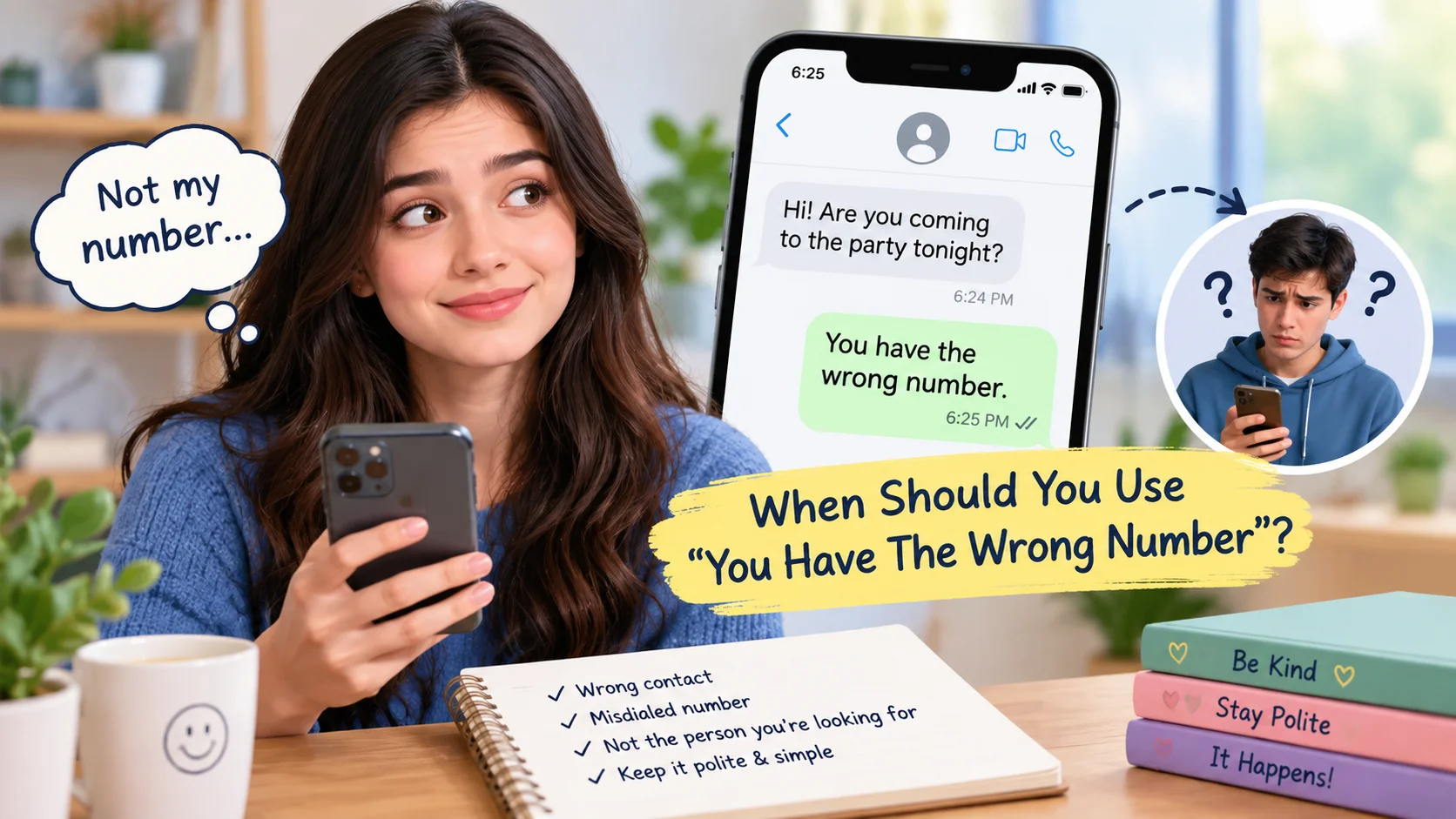
Use this phrase when communication reaches the wrong recipient.
Professional settings:
Customer support, office calls, business emails, appointment scheduling.
Casual conversations:
Personal calls, texts, social messaging.
Digital communication:
SMS, chat apps, video call invitations.
It is especially effective when speed and clarity matter.
When Should You Avoid This Phrase?
Avoid the phrase when nuance matters.
- In highly formal legal communication
- During emotionally sensitive situations
- In academic or diplomatic writing
- When the speaker may feel embarrassed or stressed
A softer phrase may reduce friction.
Is This Expression Professional, Polite, or Casual?
The phrase is generally neutral.
- Professional: Acceptable, though slightly blunt.
- Polite: Depends on delivery.
- Casual: Very common in daily speech
Its emotional subtext can range from helpful to dismissive depending on tone.
Pros and Cons of Using This Expression
Advantages
- Clear
- Fast
- Easy to understand
- Widely recognized
Potential Drawbacks
- May sound abrupt
- Lacks warmth
- Can feel repetitive in customer-facing roles
Real-Life Examples of This Expression by Context
Email:
Hello, I believe you have the wrong contact. I am not Sarah from accounting.
Meeting:
Sorry, I think this invite was sent to the wrong person.
Presentation:
It seems the wrong participant was added to this call.
Conversation:
Sorry, you have the wrong number.
Social Media:
Haha, wrong number—but good luck finding them.
“You Have The Wrong Number” vs Similar Expressions (Key Differences)
| Phrase | Meaning Difference | Tone Difference | Best Use Scenario |
|---|---|---|---|
| Wrong person | Focuses on the recipient | Casual | Text messages |
| You reached the wrong contact | More professional | Formal | Business |
| I’m not who you’re looking for | Softer | Friendly | Conversations |
| This is not the correct line | Focuses on channel | Formal | Customer support |
| Mistake in dialing | Focuses on action | Neutral | Calls |
Common Mistakes & Misuse of This Expression
- Using it aggressively
- Saying it in email where “wrong contact” fits better
- Repeating it without context
- Ignoring cultural politeness expectations
Psychological Reason People Prefer This Expression
People prefer this phrase because it reduces cognitive load. It delivers immediate clarity with minimal processing.
It also signals authority and certainty. In fast-paced digital environments, concise communication wins attention. The phrase works because modern users prioritize speed and efficiency.
US vs UK Usage
In the United States, the phrase is extremely common in phone calls and texts.
In the United Kingdom, alternatives like “You’ve got the wrong number” or “Wrong number, I’m afraid” are more common.
UK usage often sounds slightly softer due to indirect phrasing.
This Expression in Digital & Modern Communication
Digital communication has changed usage.
Emails: Prefer “wrong contact”
Slack / WhatsApp: Shorter alternatives are common
Social media: Casual versions dominate
AI summaries: Direct phrases are favored for clarity
Linguistic & Communication Insight
Emotional weight & subtext
Native speakers hear more than literal meaning. The phrase can imply correction, distance, or mild annoyance.
Direct vs indirect phrasing
Direct phrasing is efficient but may sound harsh. Indirect phrasing signals cooperation.
Professional communication perspective
In workplaces, tone impacts trust. Softer alternatives reduce defensiveness.
Pragmatic reasons for alternatives
Professionals often choose alternatives to balance authority with empathy.
Social signaling
Word choice shapes perceptions of patience, warmth, and credibility.
Tone & context guidance
Use direct phrasing for speed. Use softer phrasing when relationship matters.
Sorry, I Think You Have the Wrong Number
Meaning: A polite correction.
Why This Phrase Works: Adds softness through apology.
Real-World Usage Insight: Common in customer-facing roles.
Best Use: Professional calls.
Avoid When: Urgent situations.
Tone: Polite.
US vs UK Usage: Common in both.
Example (Message / Meeting): “Sorry, I think you have the wrong number—I’m not David.”
I Believe You’ve Reached the Wrong Contact
Meaning: Professional alternative.
Why This Phrase Works: Sounds formal and respectful.
Real-World Usage Insight: Used in business communication.
Best Use: Email.
Avoid When: Casual chats.
Tone: Professional.
US vs UK Usage: Slightly more US corporate.
Example: “I believe you’ve reached the wrong contact regarding this invoice.”
This Number Does Not Belong to That Person
Meaning: Clarifies ownership mismatch.
Why This Phrase Works: Very explicit.
Real-World Usage Insight: Useful when repeated messages occur.
Best Use: Persistent callers.
Avoid When: Casual messaging.
Tone: Neutral.
US vs UK Usage: Common globally.
Example: “This number does not belong to Ahmed.”
I’m Not the Person You’re Trying to Reach
Meaning: Centers on identity.
Why This Phrase Works: Softer than direct correction.
Real-World Usage Insight: Helpful in text messages.
Best Use: Casual or semi-formal.
Avoid When: Need a quick response.
Tone: Friendly.
US vs UK Usage: Common in both regions.
Example: “Hi, I’m not the person you’re trying to reach.”
You May Have Dialed Incorrectly
Meaning: Focuses on a dialing mistake.
Why This Phrase Works: Removes blame.
Real-World Usage Insight: Helpful for support teams.
Best Use: Phone calls.
Avoid When: Text chats.
Tone: Neutral.
US vs UK Usage: More formal.
Example: “You may have dialed incorrectly.”
I Think Your Message Was Sent in Error
Meaning: Indicates accidental sending.
Why This Phrase Works: Fits digital communication.
Real-World Usage Insight: Common in email and chat.
Best Use: Messaging.
Avoid When: Voice calls.
Tone: Professional.
US vs UK Usage: Common in both.
Example: “I think your message was sent in error.”
Wrong Person
Meaning: Short correction.
Why This Phrase Works: Extremely concise.
Real-World Usage Insight: Popular in texting.
Best Use: Casual chat.
Avoid When: Formal settings.
Tone: Casual.
US vs UK Usage: Universal.
Example: “Wrong person 😄”
Not Me
Meaning: Very casual rejection.
Why This Phrase Works: Minimal effort.
Real-World Usage Insight: Common among younger speakers.
Best Use: Informal texting.
Avoid When: Professional contexts.
Tone: Casual.
US vs UK Usage: Common in both.
Example: “Not me, sorry.”
I Think You Meant Someone Else
Meaning: Suggests the intended recipient differs.
Why This Phrase Works: Soft and collaborative.
Real-World Usage Insight: Friendly correction.
Best Use: Social chats.
Avoid When: Need strict clarity.
Tone: Warm.
US vs UK Usage: Common globally.
Example: “I think you meant someone else.”
That Contact Isn’t Available Here
Meaning: Recipient absent.
Why This Phrase Works: Formal and neutral.
Real-World Usage Insight: Customer service.
Best Use: Business calls.
Avoid When: Personal chats.
Tone: Formal.
US vs UK Usage: More corporate.
Example: “That contact isn’t available here.”
There’s Been a Mix-Up
Meaning: Indicates confusion.
Why This Phrase Works: Friendly wording.
Real-World Usage Insight: Reduces embarrassment.
Best Use: Sensitive situations.
Avoid When: Need directness.
Tone: Gentle.
US vs UK Usage: Common.
Example: “I think there’s been a mix-up.”
Easy Mistake to Make
Meaning: Reassuring response.
Why This Phrase Works: Lowers tension.
Real-World Usage Insight: Helpful in service roles.
Best Use: Upset caller.
Avoid When: Formal writing.
Tone: Reassuring.
US vs UK Usage: Common in both.
Example: “Easy mistake to make.”
No Worries, Wrong Number
Meaning: Friendly reassurance plus correction.
Why This Phrase Works: Combines warmth and clarity.
Real-World Usage Insight: Popular in texting.
Best Use: Casual digital communication.
Avoid When: Formal email.
Tone: Friendly.
US vs UK Usage: Common.
Example: “No worries, wrong number.”
You’ve Reached the Wrong Line
Meaning: Focuses on communication channel.
Why This Phrase Works: Traditional phrase.
Real-World Usage Insight: Common in phone support.
Best Use: Calls.
Avoid When: Messaging.
Tone: Neutral.
US vs UK Usage: Slightly UK-leaning.
Example: “You’ve reached the wrong line.”
Please Double-Check the Number
Meaning: Suggests verifying contact.
Why This Phrase Works: Helpful guidance.
Real-World Usage Insight: Reduces repeat mistakes.
Best Use: Repeat wrong calls.
Avoid When: Impatient exchanges.
Tone: Professional.
US vs UK Usage: Common.
Example: “Please double-check the number.”
Comparison Table of 10 Best Alternatives
These alternatives vary in tone, professionalism, and clarity. Choosing the right phrase depends on context, urgency, and relationship with the other person.
| Phrase | Meaning | Best Use | Worst Use | Tone | US vs UK Usage |
|---|---|---|---|---|---|
| Sorry, I think you have the wrong number | Polite correction | Calls | Urgent support | Polite | Equal |
| Wrong person | Quick correction | Texts | Formal email | Casual | Equal |
| I believe you’ve reached the wrong contact | Professional correction | Casual chat | Formal | US | |
| Not me | Casual denial | Friends | Workplace | Casual | Equal |
| I’m not the person you’re trying to reach | Identity correction | Chat | Fast calls | Friendly | Equal |
| You may have dialed incorrectly | Dialing error | Calls | Texts | Neutral | Equal |
| I think your message was sent in error | Wrong message | Messaging | Voice call | Professional | Equal |
| There’s been a mix-up | Gentle correction | Sensitive situations | Legal contexts | Soft | Equal |
| You’ve reached the wrong line | Wrong channel | Support | Social chat | Neutral | UK |
| Please double-check the number | Prevent repeats | Repeated calls | Casual texting | Helpful | Equal |
Conclusion
The phrase “You Have the Wrong Number” remains one of the clearest ways to correct misdirected communication in modern English. Whether used during phone calls, text messages, emails, or chat apps, it delivers a simple message: the sender or caller has reached the wrong person. Its strength lies in clarity, speed, and universal understanding. However, tone matters just as much as wording. In professional or sensitive situations, softer alternatives such as “I believe you’ve reached the wrong contact” or “Sorry, I think you have the wrong number” can sound more polite and collaborative. Understanding when to use direct versus gentle phrasing improves communication, reduces misunderstandings, and builds trust. For ESL learners, professionals, and content writers, mastering this phrase and its alternatives enhances fluency and social awareness. Ultimately, choosing the right expression depends on context, audience, and the impression you want to leave.
FAQs
What does this phrase mean?
This expression means someone has contacted an incorrect phone number and reached the wrong person. It is commonly used in calls, text messages, and messaging apps to inform the sender or caller that their communication was misdirected and they should verify the intended contact information.
Is this expression rude?
No, the phrase itself is not rude. It is neutral and direct. However, tone of voice and wording affect perception. Saying it abruptly may sound harsh, while adding polite words like “sorry” or “I think” makes it sound friendlier and more respectful in personal or professional communication.
Is this expression professional?
Yes, but it is somewhat direct for formal business communication. In professional settings, alternatives like “I believe you’ve reached the wrong contact” or “This number does not belong to that department” often sound more polished while still communicating the same message clearly.
What are polite alternatives?
Polite alternatives include “Sorry, I think you have the wrong number,” “I’m afraid this is not the correct number,” and “I believe there’s been a mistake.” These options soften the correction and help avoid sounding abrupt or dismissive, especially in sensitive conversations.
Can I use this expression in an email?
Usually, no. In emails, phrases like “You may have contacted the wrong person” or “I believe this email was sent in error” sound more natural. Since email communication tends to be more formal, replacing “number” with “contact” or “recipient” is often better.
Why do people prefer short phrases like this?
People prefer short phrases because they reduce cognitive effort and communicate quickly. In modern communication, especially through phones and messaging apps, concise language saves time and reduces confusion. Simple phrases like this are easy to understand across cultures and language proficiency levels.
How is the phrase used in text messaging?
In text messaging, the phrase is often shortened to “Wrong number” or softened with casual language like “Oops, wrong person.” Messaging culture favors brevity, so shorter alternatives are common, especially among friends or in fast-paced digital conversations.
Is this phrase common in both the US and UK?
Yes, the phrase is widely understood in both the United States and the United Kingdom. However, UK speakers may prefer slightly softer expressions such as “You’ve got the wrong number” or “Wrong number, I’m afraid,” which sound more indirect and polite.
Can tone change the meaning of this phrase?
The literal meaning stays the same, but tone strongly affects interpretation. A calm or friendly delivery feels helpful, while a sharp tone may sound irritated or dismissive. This is why professionals often choose softer alternatives to maintain positive communication and rapport.
Why should ESL learners understand this phrase?
ESL learners benefit from understanding this phrase because it appears frequently in everyday conversations, phone calls, and digital messaging. Learning both the direct phrase and softer alternatives improves practical communication skills, cultural awareness, and confidence when interacting with native English speakers.

Alexander B is an English-language writer and content creator specializing in grammar, vocabulary, and everyday communication. He focuses on creating clear, practical, and easy-to-understand content that helps students, professionals, and ESL learners improve their English and communicate with confidence.
