
Imagine your manager sends a vague message: “We need this fixed by tomorrow.” You stare at the screen, wondering, what am I supposed to do? Or maybe you’re a student facing unclear assignment instructions, or an ESL learner trying to respond naturally in English. This phrase appears in moments of confusion, uncertainty, or frustration when expectations are unclear.
“What Am I Supposed To Do?” matters because it reflects more than confusion—it signals a need for guidance, clarity, or support. In modern communication, tone matters just as much as wording. The expression can sound curious, frustrated, helpless, or even confrontational depending on delivery. Choosing the right alternative can improve professionalism, reduce misunderstandings, and help conversations stay productive.
What Does “What Am I Supposed To Do?” Mean?
“What Am I Supposed To Do?” means asking what action, response, or next step is expected in a situation where instructions, expectations, or solutions are unclear. The phrase is commonly used in stressful, confusing, or uncertain situations where someone needs guidance or clarification.
Origin & History of “What Am I Supposed To Do?”
The phrase comes from everyday English speech rather than a single historical source. The word “supposed” originates from Latin supponere, meaning “to assume” or “to place under,” later entering English through Old French.
Historically, “supposed to” evolved into a common English construction used to express duty, expectation, or obligation. By the 19th and 20th centuries, expressions such as “What am I supposed to do?” became widespread in spoken English, especially in emotionally charged conversations.
Over time, the wording gained cultural significance in movies, TV, workplace communication, and digital messaging because it captures a universal human experience: uncertainty about expectations.
Synonyms & Alternatives by Tone
Professional & Neutral Alternatives
- What would you like me to do?
- Could you clarify the next step?
- How should I proceed?
- What is expected of me?
- What action should I take?
Polite & Supportive Alternatives
- Can you guide me here?
- Could you help me understand the next step?
- What would be the best approach?
- Can you point me in the right direction?
- I’d appreciate some direction.
Encouraging & Reassuring
- What’s the best next step?
- How can we move forward?
- What options do we have?
- Where should we begin?
- How do we solve this?
Casual, Playful & Idiomatic Alternatives
- So… what now?
- What do I do here?
- What’s the move?
- Where do we go from here?
- Help me out here.
When Should You Use This Phrase?
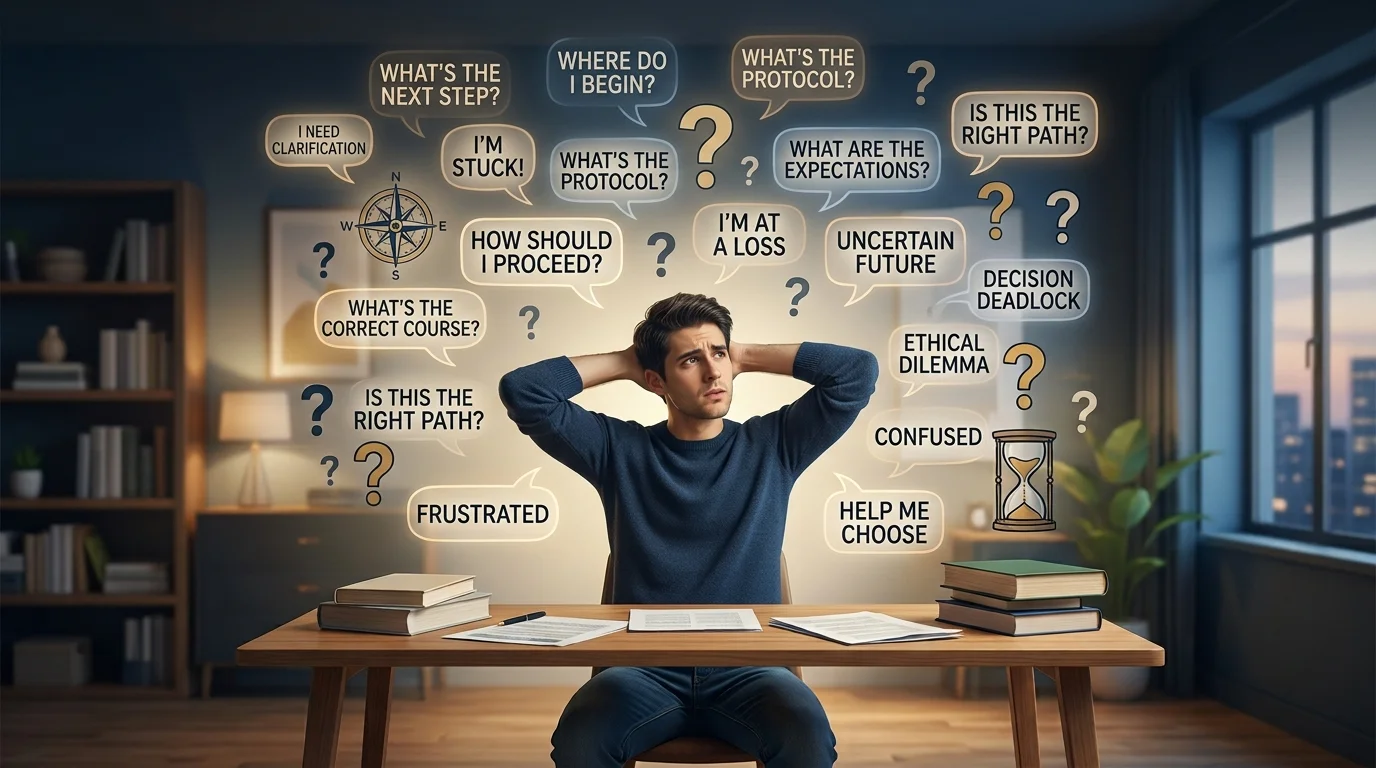
Use this expression when direct clarity is needed.
Professional Settings
Useful when instructions are incomplete and you need specifics.
Casual Conversations
Common among friends, family, or peers during uncertainty.
Writing & Digital Communication
Works in emails, chats, or collaborative tools like Slack when context is missing.
Especially Effective When
- Deadlines are approaching
- Instructions are vague
- Roles are unclear
- A decision is needed quickly
When Should You Avoid This Phrase?
Avoid this wording in highly formal or sensitive situations.
- Legal documents
- Academic writing
- Executive presentations
- Emotional conflicts
- Crisis communication
It may sound overly emotional or defensive.
Is This Phrase Professional, Polite, or Casual?
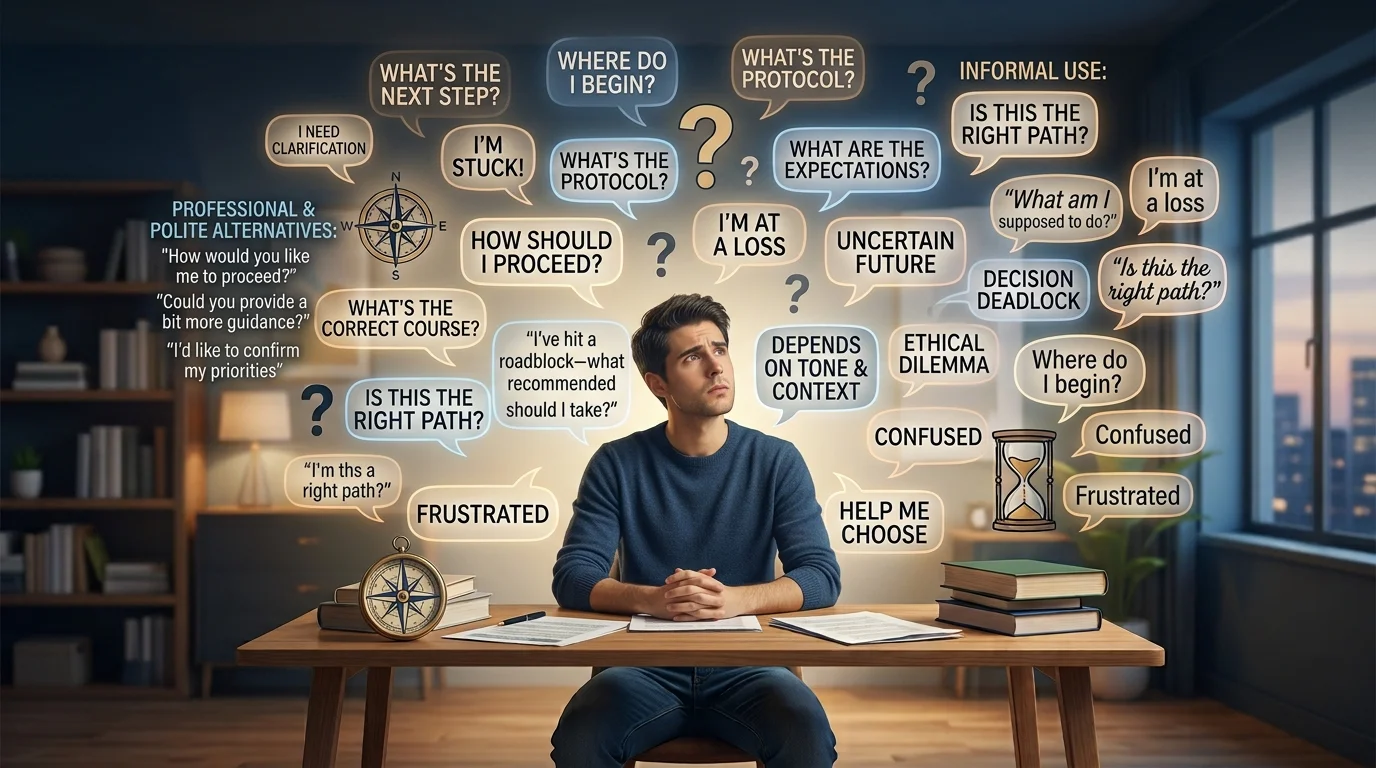
The expression sits between neutral and casual.
- Professional: Only when phrased calmly
- Polite: Depends heavily on tone
- Casual: Very common in everyday speech
Emotional subtext matters. A calm voice signals curiosity. A sharp tone signals frustration.
Pros and Cons of Using This Phrase
Advantages
- Clear
- Fast
- Easy to understand
Potential Drawbacks
- Can sound frustrated
- May appear passive
- Can feel repetitive
Real-Life Examples of This Expression by Context
“Thanks for the update. I’m unclear on ownership—what should I do next?”
Meeting
“The requirements changed again. What should I do with the current version?”
Presentation
“With these budget cuts, what should I prioritize?”
Conversation
“You canceled last minute—what should I do now?”
Social Media
“App crashed after the update. What should I do?”
This Expression vs Similar Expressions
| Phrase | Meaning Difference | Tone Difference | Best Use Scenario |
|---|---|---|---|
| What should I do? | Less emotional | Neutral | Professional conversations |
| What now? | More immediate | Casual | Quick reactions |
| How should I proceed? | Action-focused | Professional | Meetings |
| What are my options? | Decision-oriented | Strategic | Planning |
| Where do we go from here? | Collaborative | Supportive | Team discussions |
Common Mistakes & Misuse of This Wording
- Overusing it instead of proposing solutions
- Using it in formal writing
- Sounding sarcastic unintentionally
- Ignoring cultural tone differences
Psychological Reasons People Prefer This Expression
This wording reduces cognitive load. When overwhelmed, people want simple guidance.
It also signals:
- Need for authority
- Need for reassurance
- Need for structure
In fast communication environments, short, direct questions feel efficient.
US vs UK Usage of This Phrase
US
Very common in speech and digital messaging.
UK
Also common, though alternatives like “What should I do then?” appear often.
Tone perception is similar in both regions.
This Wording in Digital & Modern Communication
In digital communication, brevity matters.
- Emails: Clarify tasks
- Slack: Fast alignment
- WhatsApp: Casual clarification
- Social media: Express frustration or confusion
- AI summaries: Often rewritten into neutral forms
Linguistic & Communication Insight
Emotional Weight & Subtext
Native speakers often hear more than the literal meaning. The wording may signal stress, helplessness, or urgency.
Direct vs Indirect Phrasing
Direct phrasing creates urgency. Indirect alternatives soften emotional impact.
Professional Communication Perspective
In workplaces, this wording can sound reactive. Alternatives often sound more collaborative.
Pragmatic Reasons for Alternatives
Professionals choose softer phrasing to:
- Reduce defensiveness
- Invite collaboration
- Preserve authority
Social Signaling
Word choice affects trust. Calm phrasing increases credibility.
Tone & Context Guidance
Use the expression carefully when power dynamics matter.
How Should I Proceed?
Meaning: Asking for the correct next step.
Why This Phrase Works: Clear and professional.
Real-World Usage Insight: Common in corporate communication.
Best Use: Meetings.
Avoid when: Casual chat.
Tone: Professional.
US vs UK Usage: Common in both.
Example (Meeting): “The client changed scope—how should I proceed?”
What Should I Do?
Meaning: Asking for guidance.
Why This Phrase Works: Simple and universal.
Real-World Usage Insight: Common in speech.
Best Use: Everyday situations.
Avoid when: Very formal settings.
Tone: Neutral.
US vs UK Usage: Universal.
Example (Message): “I missed the deadline. What should I do?”
What Would You Like Me To Do?
Meaning: Asking for explicit instructions.
Why This Phrase Works: Clarifies expectations.
Real-World Usage Insight: Useful with managers.
Best Use: Workplace.
Avoid When: Emotional arguments.
Tone: Polite.
US vs UK Usage: Common in both.
Example (Email): “The requirements changed. What would you like me to do?”
Could You Clarify the Next Step?
Meaning: Requesting clarification.
Why This Phrase Works: Professional and diplomatic.
Real-World Usage Insight: Strong email phrasing.
Best Use: Business communication.
Avoid when: Casual chats.
Tone: Formal.
US vs UK Usage: Common in both.
Example (Email): “Could you clarify the next step for implementation?”
What Action Should I Take?
Meaning: Asking for required action.
Why This Phrase Works: Action-oriented.
Real-World Usage Insight: Common in project management.
Best Use: Formal work.
Avoid when: Informal talk.
Tone: Professional.
US vs UK Usage: Slightly more common in US business.
Example (Meeting): “The report is delayed. What action should I take?”
Can You Guide Me Here?
Meaning: Asking for help.
Why This Phrase Works: Warm and collaborative.
Real-World Usage Insight: Common among learners.
Best Use: Mentorship.
Avoid when: Crises.
Tone: Supportive.
US vs UK Usage: Common.
Example (Message): “Can you guide me here? I’m stuck.”
What’s the Best Next Step?
Meaning: Asking for optimal direction.
Why This Phrase Works: Strategic wording.
Real-World Usage Insight: Good leadership language.
Best Use: Planning.
Avoid when: Very casual chat.
Tone: Strategic.
US vs UK Usage: Common.
Example (Meeting): “What’s the best next step for launch?”
Where Should We Begin?
Meaning: Starting point inquiry.
Why This Phrase Works: Collaborative.
Real-World Usage Insight: Good in teams.
Best Use: Workshops.
Avoid When: Instructions already exist.
Tone: Cooperative.
US vs UK Usage: Common.
Example (Meeting): “Where should we begin?”
What Are My Options?
Meaning: Asking about possible choices.
Why This Phrase Works: Encourages decision-making.
Real-World Usage Insight: Useful in planning.
Best Use: Decision-heavy scenarios.
Avoid When: Immediate action is needed.
Tone: Analytical.
US vs UK Usage: Universal.
Example (Email): “What are my options moving forward?”
How Can We Move Forward?
Meaning: Seeking collaborative progress.
Why This Phrase Works: Team-oriented.
Real-World Usage Insight: Good conflict resolution phrase.
Best Use: Team issues.
Avoid When: Individual task clarification.
Tone: Supportive.
US vs UK Usage: Common.
Example (Meeting): “How can we move forward after this issue?”
What Now?
Meaning: Immediate reaction.
Why This Phrase Works: Short and emotional.
Real-World Usage Insight: Common speech.
Best Use: Casual situations.
Avoid when: Formal communication.
Tone: Casual.
US vs UK Usage: Very common.
Example (Conversation): “The server crashed—what now?”
What’s the Move?
Meaning: Asking for the next action.
Why This Phrase Works: Modern slang.
Real-World Usage Insight: Popular with younger speakers.
Best Use: Casual chat.
Avoid When: Workplace.
Tone: Playful.
US vs UK Usage: More common in the US.
Example (Message): “Meeting got canceled. What’s the move?”
Where Do We Go From Here?
Meaning: Asking about future direction.
Why This Phrase Works: Reflective and collaborative.
Real-World Usage Insight: Common in leadership.
Best Use: Strategy talks.
Avoid When: Quick instructions needed.
Tone: Thoughtful.
US vs UK Usage: Common.
Example (Meeting): “The campaign underperformed. Where do we go from here?”
Help Me Out Here
Meaning: Requesting assistance.
Why This Phrase Works: Friendly.
Real-World Usage Insight: Common among friends.
Best Use: Informal settings.
Avoid when: Formal contexts.
Tone: Casual.
US vs UK Usage: Common in the US.
Example (Chat): “Help me out here—I’m confused.”
Can You Point Me in the Right Direction?
Meaning: Asking for guidance.
Why This Phrase Works: Polite and indirect.
Real-World Usage Insight: Good for networking.
Best Use: Professional help requests.
Avoid When: Immediate urgency.
Tone: Polite.
US vs UK Usage: Common in both.
Example (Email): “Can you point me in the right direction regarding onboarding?”
Comparison Table of 10 Best Alternatives
These alternatives work best when you need clarity without sounding frustrated. Choose based on formality, urgency, and relationship with the listener.
| Phrase | Meaning | Best Use | Worst Use | Tone | US vs UK Usage |
|---|---|---|---|---|---|
| How should I proceed? | Ask for the next step | Meetings | Casual chat | Professional | Both |
| What should I do? | Ask for guidance | Daily use | Formal reports | Neutral | Both |
| What would you like me to do? | Ask for instructions | Managers | Arguments | Polite | Both |
| Could you clarify the next step? | Clarify instructions | Emails | Casual texts | Formal | Both |
| What action should I take? | Ask for action | Projects | Friend chats | Professional | US-heavy |
| Can you guide me here? | Ask for help | Mentorship | High urgency | Warm | Both |
| What’s the best next step? | Ask for a strategy | Planning | Casual jokes | Strategic | Both |
| What are my options? | Ask choices | Decision-making | Emergencies | Analytical | Both |
| How can we move forward? | Progress together | Team conflicts | Solo tasks | Collaborative | Both |
| Where do we go from here? | Future direction | Strategy | Immediate tasks | Reflective | Both |
Conclusion
The phrase “What Am I Supposed To Do?” remains one of the most common ways English speakers express confusion, uncertainty, or a need for direction. Its strength lies in its simplicity—it clearly communicates that guidance, clarification, or expectations are missing. However, the wording also carries emotional weight. Depending on tone and context, it can sound curious, frustrated, helpless, or even defensive. That is why understanding suitable alternatives matters, especially in professional, academic, and digital communication. Choosing a more precise phrase such as “How should I proceed?” or “What are my options?” can improve clarity while maintaining professionalism. For ESL learners, professionals, and writers, mastering this expression and its alternatives helps improve communication, reduce misunderstandings, and build stronger relationships. Ultimately, effective communication is not just about asking questions—it is about asking them in ways that encourage clarity, collaboration, and constructive responses.
FAQs
Is this phrase rude?
Not necessarily. The expression itself is neutral, but tone changes everything. When spoken calmly, it simply asks for guidance or clarification. When said with frustration, sarcasm, or anger, it can sound rude or confrontational. In professional settings, softer alternatives often help maintain politeness and collaboration.
Is this phrase professional?
It can be professional in informal workplace conversations, but it is not always the best choice in formal communication. Phrases like “How should I proceed?” or “Could you clarify the next step?” usually sound more polished and workplace-friendly while communicating the same meaning.
What is the meaning of this expression?
The wording means asking what action, response, or next step is expected when someone feels uncertain or lacks clear instructions. It is commonly used when responsibilities are unclear or when a person needs direction to move forward in a situation.
What are the best alternatives to this phrase?
Some strong alternatives include “How should I proceed?” “What should I do?” “What are my options?” and “Could you clarify the next step?” The best choice depends on context, tone, and whether the conversation is formal, casual, or collaborative.
When should I avoid using this phrase?
Avoid using it in highly formal writing, legal communication, academic papers, or emotionally sensitive discussions. In these situations, the wording may sound overly emotional or vague. More precise wording often improves professionalism and reduces potential misunderstandings.
Why do people use this expression so often?
People use this wording because it is quick, natural, and easy to understand. Psychologically, it helps reduce mental stress by directly asking for guidance. It also signals vulnerability, uncertainty, and a desire for structure during confusing situations.
Is this phrase common in American English?
Yes, it is very common in American English across spoken conversations, text messages, workplaces, and media. Native speakers use it frequently when facing confusion, unclear expectations, or stressful decision-making situations requiring immediate guidance.
Is this phrase common in British English?
Yes, British English speakers also use it regularly. However, alternatives such as “What should I do then?” or “How should I handle this?” may appear more often in everyday UK conversations depending on regional speaking patterns.
Can this phrase sound emotional?
Yes. Beyond its literal meaning, the expression often carries emotional subtext. Native speakers may hear stress, frustration, helplessness, or urgency depending on delivery. This emotional layer explains why context and tone strongly influence how the phrase is perceived.
Why is tone important when using this phrase?
Tone determines whether the question sounds collaborative or confrontational. A calm tone invites support and clarification, while an irritated tone may trigger defensiveness. In both personal and professional communication, careful tone management improves understanding and trust.

James W is an English language writer and grammar enthusiast who enjoys exploring the details of effective communication. His work focuses on grammar, vocabulary, synonyms, phrases, and everyday English usage. James aims to make language learning simple and practical by providing clear explanations and useful examples.
