
Imagine finishing an email to a colleague, replying to a customer, or ending a chat with a friend. You want to sound warm, respectful, and positive but not overly formal or robotic. That’s where “Have a nice day ahead” comes in. It’s a polite closing phrase used to wish someone well for the rest of their day.
In modern communication, especially emails, messaging apps, and customer service interactions, small phrases like this shape how people perceive your tone. The right closing can make you sound professional, thoughtful, and approachable, while the wrong one may feel awkward, repetitive, or unnatural. Understanding the meaning, usage, and alternatives of “Have a nice day ahead” helps you communicate more clearly and naturally across personal and professional contexts.
What Does “Have A Nice Day Ahead” Mean?
“Have a nice day ahead” means wishing someone a pleasant, positive, or productive remainder of their day. The phrase is commonly used at the end of conversations, emails, chats, or service interactions to express courtesy and goodwill toward the listener or reader.
Origin & History of “Have A Nice Day Ahead”
The phrase “Have a nice day” became widely popular in the United States during the mid-20th century, especially in retail and customer service. It emerged as a standard polite farewell used by store clerks, receptionists, and service workers.
The addition of “ahead” appears to be a later variation influenced by global English usage, particularly in South Asian and ESL-speaking regions, where speakers often emphasize the remaining part of the day. Linguistically, “ahead” clarifies that the speaker is referring to the time still to come rather than the entire day.
Over time, the phrase evolved from a retail-script farewell into a broader expression used in emails, business communication, and digital messaging. Today, it reflects a universal desire for warm, courteous communication.
Synonyms & Alternatives by Tone
Professional & Neutral Alternatives
- Wishing you a pleasant day
- Have a productive day
- Hope you have a great day
- Wishing you a good day
- Enjoy the rest of your day
Polite & Supportive Alternatives
- Take care
- Wishing you all the best
- Hope your day goes well
- Stay well
- Best wishes
Encouraging & Reassuring Alternatives
- Keep up the great work
- You’ve got this
- Stay positive
- Wishing you success today
- Make today count
Casual, Playful & Idiomatic Alternatives
- Have a good one
- Catch you later
- Take it easy
- Enjoy your day
- Have fun out there
When Should You Use “Have A Nice Day Ahead”?

Professional Settings
This phrase works well in emails, customer support, and workplace communication where warmth matters without sounding too casual.
Casual Conversations
Friends, acquaintances, and social contacts may use it naturally when ending a conversation.
Writing, Presentations & Digital Communication
Useful in email sign-offs, LinkedIn messages, and polite responses.
When It Is Especially Effective
It works best when ending short interactions and when you want to leave a positive emotional impression.
When Should You Avoid “Have A Nice Day Ahead”?
Avoid using it in:
- Highly formal academic writing
- Legal documentation
- Condolence messages
- Serious conflict-resolution communication
- Situations requiring emotional nuance
In sensitive contexts, the phrase may sound generic or emotionally disconnected.
Is “Have A Nice Day Ahead” Professional, Polite, or Casual?
The phrase sits between professional and casual.
- Professional: Moderately professional
- Polite: Highly polite
- Casual: Slightly casual due to warmth
Emotionally, it signals friendliness and goodwill. Most audiences perceive it positively, though native speakers may sometimes find “Have a nice day” more natural than “Have a nice day ahead.”
Pros and Cons of Using “Have A Nice Day Ahead”
Advantages
- Clear and easy to understand
- Warm and respectful
- Suitable for global English communication
- Accessible to non-native speakers
Potential Drawbacks
- Can feel repetitive
- Slightly unnatural in some native-speaking regions
- May sound scripted in professional settings
Real-Life Examples of “Have A Nice Day Ahead” by Context
Emails
“Thank you for your prompt response. Have a nice day ahead.”
Meetings
“That covers today’s agenda. Have a nice day ahead, everyone.”
Presentations
“Thank you for attending. Have a nice day ahead.”
Conversations
“Thanks for stopping by—have a nice day ahead!”
Social Media
“Thanks for reading! Have a nice day ahead.”
“Have A Nice Day Ahead” vs Similar Expressions (Key Differences)
| Phrase | Meaning Difference | Tone Difference | Best Use Scenario |
| Have a nice day | Standard farewell | Neutral | Universal usage |
| Enjoy your day | Focuses on enjoyment | Warm | Friendly conversations |
| Take care | Focuses on well-being | Caring | Personal communication |
| Have a good one | More idiomatic | Casual | Informal chats |
| Best wishes | Focuses on goodwill | Formal | Professional writing |
Common Mistakes & Misuse of “Have A Nice Day Ahead”
Common mistakes include:
- Using it repeatedly in every email
- Using it during negative conversations
- Using it in emotionally serious situations
- Assuming all English-speaking cultures use it equally
Cultural differences matter in global communication.
Psychological Reasons People Prefer “Have A Nice Day Ahead”
People like this phrase because it reduces mental effort.
- Cognitive ease: Instantly understood
- Trust signals: Politeness increases likability
- Attention efficiency: Short but warm
- Emotional reward: Ends interactions positively
Small positive phrases often improve relationship quality.
US vs UK Usage of “Have A Nice Day Ahead”
US
Americans commonly use “Have a nice day” rather than “Have a nice day ahead.”
UK
British English often prefers:
- Cheers
- Take care
- Have a good day
“Day ahead” appears less natural in UK speech.
“Have A Nice Day Ahead” in Digital & Modern Communication
Emails
Common in customer support and professional communication.
Slack / WhatsApp
Less common but still understandable.
Social Media
Used by creators and businesses to sound warm.
AI-Generated Summaries
AI assistants often use such closings because they are polite and universally safe.
Linguistic & Communication Insight
Emotional Weight & Subtext
Native speakers hear more than the literal meaning. The phrase signals warmth, emotional distance, or scripted politeness depending on context.
Direct vs Indirect Phrasing
Direct phrasing communicates clarity. Softer alternatives may reduce pressure and feel more collaborative.
Professional Communication Perspective
In workplaces, overly generic closings can feel automated. Personalized alternatives often build stronger rapport.
Pragmatic Reasons for Alternatives
Professionals may choose alternatives to:
- Reduce defensiveness
- Sound less robotic
- Signal collaboration
- Improve engagement
Social Signaling
Word choice affects trust. Warm language increases approachability.
Tone & Context Guidance
Use it when warmth helps. Avoid it when emotional nuance matters.
Meaning, Usage & Examples for Each Alternative
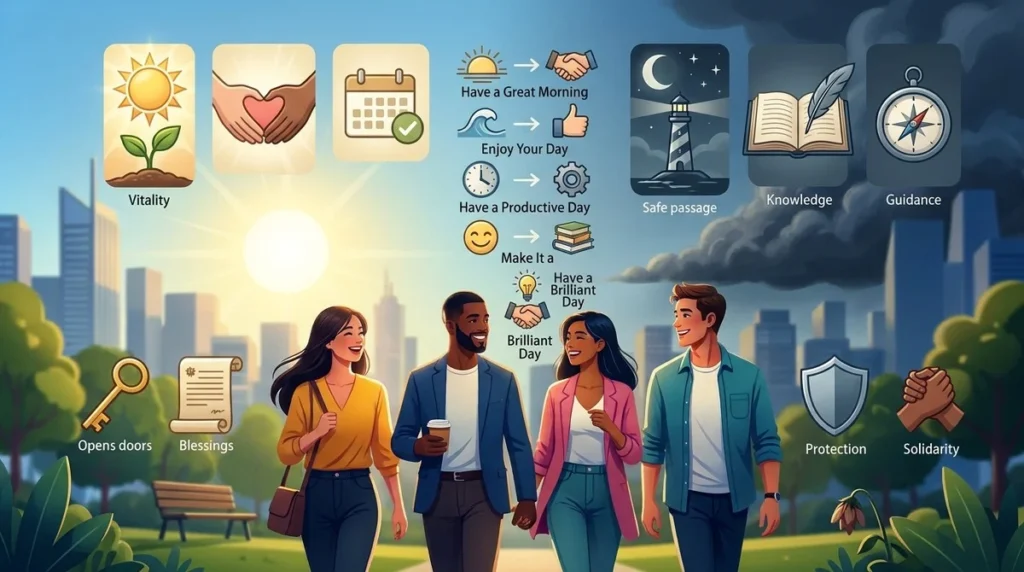
Wishing You a Pleasant Day
Meaning: A polite wish for a pleasant day
Why This Phrase Works: Sounds refined and professional.
Real-World Usage Insight: Common in business emails
Best Use: Formal communication
Avoid when: Casual chat.s
Tone: Polite, formal
US vs UK Usage: Common in both
Example (Email): “Thank you for your time. Wishing you a pleasant day.”
Have a Productive Day
Meaning: Wishes for efficiency and achievement
Why This Phrase Works: Motivational
Real-World Usage Insight: Popular in workplaces
Best Use: Professional teams
Avoid when: Casual conversations.
Tone: Encouraging
US vs UK Usage: More common in US offices
Example (Meeting): “Let’s wrap up here. Have a productive day.”
Hope You Have a Great Day
Meaning: Warm positive wish
Why This Phrase Works: Friendly and natural
Real-World Usage Insight: Common in everyday English
Best Use: General use
Avoid when: Legal/formal writing.g
Tone: Friendly
US vs UK Usage: Very common in both
Example (Message): “Good luck with your interview. Hope you have a great day.”
Wishing You a Good Day
Meaning: Neutral goodwill
Why This Phrase Works: Simple and versatile
Real-World Usage Insight: Works across cultures
Best Use: Professional communication
Avoid when: Very casual chats.
Tone: Neutral
US vs UK Usage: Common globally
Example (Email): “Thanks again. Wishing you a good day.”
Enjoy the Rest of Your Day
Meaning: Focuses on the remaining day
Why This Phrase Works: Very natural
Real-World Usage Insight: Popular in customer support
Best Use: Afternoon/evening communication
Avoid when: Early morning.
Tone: Warm
US vs UK Usage: Common inthe US
Example (Message): “Great talking with you. Enjoy the rest of your day.”
Take Care
Meaning: Wishes well-being
Why This Phrase Works: Personal and caring
Real-World Usage Insight: Common in close relationships
Best Use: Friendly interactions
Avoid when: Highly formal contexts.
Tone: Caring
US vs UK Usage: Very common
Example (Message): “Talk soon. Take care.”
Wishing You All the Best
Meaning: Strong goodwill
Why This Phrase Works: Supportive
Real-World Usage Insight: Used during transitions
Best Use: Farewell messages
Avoid when: Routine chats.
Tone: Warm
US vs UK Usage: Common globally
Example (Email): “Wishing you all the best in your new role.”
Hope Your Day Goes Well
Meaning: Hope fora positive day outcome
Why This Phrase Works: Soft and natural
Real-World Usage Insight: Casual but polite
Best Use: Messages
Avoid when: Formal letters.
Tone: Friendly
US vs UK Usage: Common
Example (Message): “Big presentation today hope your day goes well.”
Stay Well
Meaning: Maintain well-being
Why This Phrase Works: Caring but concise
Real-World Usage Insight: Became popular post-pandemic
Best Use: Caring communication
Avoid when: Very casual,l slang-heavy chats.
Tone: Warm
US vs UK Usage: Increasing globally
Example (Email): “Stay well and keep in touch.”
Best Wishes
Meaning: Good intentions and goodwill
Why This Phrase Works: Timeless
Real-World Usage Insight: Common email closing
Best Use: Professional sign-offs
Avoid when: Very casual messaging.
Tone: Formal-warm
US vs UK Usage: Very common
Example (Email): “Best wishes, Sarah”
Have a Good One
Meaning: Casual good-day wish
Why This Phrase Works: Friendly and natural
Real-World Usage Insight: Common in North America
Best Use: Informal conversations
Avoid when: Formal meetings.
Tone: Casual
US vs UK Usage: More US
Example (Conversation): “See you tomorrow. Have a good one.”
Catch You Later
Meaning: See you again soon
Why This Phrase Works: Relaxed and social
Real-World Usage Insight: Common among friends
Best Use: Casual conversation
Avoid when: Professional settings.
Tone: Playful
US vs UK Usage: Common
Example (Chat): “Catch you later!”
Take It Easy
Meaning: Relax and don’t stress
Why This Phrase Works: Comforting
Real-World Usage Insight: Often used socially
Best Use: Informal chats
Avoid When: Serious workplace communication.n
Tone: Relaxed
US vs UK Usage: More US
Example (Message): “Long week,k take it easy.”
Enjoy Your Day
Meaning: Encourages enjoyment
Why This Phrase Works: Warm and uplifting
Real-World Usage Insight: Common in service settings
Best Use: General use
Avoid when: Sensitive situations.
Tone: Positive
US vs UK Usage: Common globally
Example (Email): “Thanks for stopping by. Enjoy your day.”
Have Fun Out There
Meaning: Encourages enjoyment/adventure
Why This Phrase Works: Energetic
Real-World Usage Insight: Social and playful
Best Use: Friends/social settings
Avoid When: Professional communication.
Tone: Playful
US vs UK Usage: Mostly US
Example (Message): “Road trip today? Have fun out there!”
Comparison Table of 10 Best Alternatives
The alternatives below are the most versatile replacements for “Have a nice day ahead.” They balance professionalism, warmth, and natural usage across modern English communication.
| Phrase | Meaning | Best Use | Worst Use | Tone | US vs UK Usage |
| Have a nice day | Standard farewell | Universal | Sensitive topics | Neutral | Commonin thee US |
| Enjoy your day | Wish enjoyment | General communication | Condolences | Warm | Common |
| Take care | Wish wellbeing | Personal chats | Legal writing | Caring | Very common |
| Best wishes | Goodwill | Emails | Casual chats | Formal-warm | Common |
| Have a productive day | Wish success | Workplace | Personal chats | Professional | More US |
| Hope you have a great day | Positive wish | Everyday use | Legal docs | Friendly | Common |
| Stay well | Health-focused | Caring messages | Slang chats | Warm | Growing |
| Enjoy the rest of your day | Remaining day | Afternoon chats | Morning | Warm | Common |
| Have a good one | Casual farewell | Friends | Formal settings | Casual | Mostly US |
| Wishing you all the best | Strong goodwill | Farewells | Routine chats | Supportive | Common |
Conclusion
The phrase “Have a nice day ahead” remains a warm, polite, and widely understood expression used to end conversations on a positive note. Whether in emails, workplace communication, customer service, or casual chats, it conveys goodwill and respect while helping maintain friendly communication. However, like many common expressions, its effectiveness depends heavily on tone, audience, and context. In professional settings, it can sound courteous and approachable, while in highly formal or emotionally sensitive situations, more tailored alternatives may work better.
Understanding its meaning, origin, and nuanced alternatives allows you to communicate more naturally and confidently. Choosing the right closing phrase is not just about politeness it also shapes how others perceive your professionalism, empathy, and communication style. By using thoughtful alternatives when appropriate, you can improve clarity, strengthen relationships, and make your daily interactions more meaningful in both digital and real-world conversations.
FAQs
Is “Have a nice day ahead” grammatically correct?
Yes, “Have a nice day ahead” is grammatically correct. However, native English speakers—especially in the US and UK—more commonly say “Have a nice day” or “Enjoy the rest of your day.” Adding “ahead” is understandable but may sound slightly less natural in some English-speaking regions.
Is “Have a nice day ahead” professional?
Yes, the phrase is generally professional and polite. It works well in customer service emails, workplace chats, and polite business communication. However, in highly formal settings such as legal or academic correspondence, more neutral closings like “Best regards” or “Wishing you a pleasant day” may sound more appropriate.
Can I use “Have a nice day ahead” in emails?
Absolutely. It is commonly used as an email closing to leave a positive impression. The phrase works especially well in support emails, follow-up messages, and professional correspondence where warmth and politeness matter. Just avoid overusing it in every email to keep your communication sounding natural.
What is a better alternative to “Have a nice day ahead”?
The best alternative depends on context. Popular options include “Have a great day,” “Take care,” “Enjoy your day,” and “Best wishes.” Professional communication often benefits from more natural alternatives that match the relationship, tone, and purpose of the message.
Is “Have a nice day ahead” formal or casual?
This phrase sits between formal and casual. It is polite enough for professional communication but warm enough for casual conversations. That flexibility makes it useful in everyday communication, though it may sound slightly conversational compared to highly formal business expressions.
Why do people use “Have a nice day ahead”?
People use this phrase to express goodwill and end interactions positively. Psychologically, positive closing statements help strengthen relationships, improve likability, and create smoother social exchanges. Even short phrases like this can influence how warm, respectful, and approachable someone appears.
Is “Have a nice day ahead” common in the US?
The phrase is understandable in the US but less common than “Have a nice day.” Most American English speakers omit the word “ahead.” While it won’t sound incorrect, more natural alternatives may improve fluency and native-like communication in American contexts.
Is this phrase common in British English?
It is less common in British English. UK speakers often prefer closings such as “Take care,” “Cheers,” or “Have a good day.” British communication generally favors shorter, more understated expressions, making “day ahead” feel slightly unusual to some native speakers.
Should I avoid using this phrase in sensitive situations?
Yes. In emotional, serious, or sensitive conversations—such as condolence messages, conflict resolution, or difficult workplace discussions—the phrase may sound generic or detached. In these situations, personalized and empathetic wording usually communicates care more effectively than standard polite closings.
Does word choice really affect communication?
Yes, significantly. Word choice influences tone, trust, emotional connection, and clarity. Small differences between phrases can change how warm, authoritative, or approachable you sound. Choosing thoughtful expressions improves communication quality and helps ensure your message matches the intended context and audience.

Emily R is a dedicated English language writer and grammar enthusiast who focuses on helping readers communicate with greater clarity and confidence. Her work covers grammar, vocabulary, common phrases, synonyms, and everyday English usage.
